Early on, as I began working with the tale of the Horsetail Girl, I found myself circling a part of the story I hesitated to touch. So much so that I doubted I would ever be able to tell it.
It wasn’t that moment when the girl’s face is torn off. A moment that had me worried, for sure, and I have been scared that I might somehow traumatize my audience with it. But that fear subsided once I had tested, asked, and talked about it. It’s further along in the story I get stuck.
After the revelation that the young Khan has married the wrong bride and lived with a sorceress, daughter of “the eight–legged devil”—he must endure a ritual of purification. He nearly dies in the icy water before being hung up in a tree to be cleansed by the winds. It isn’t his suffering in itself that frightens me. It’s the very idea of purification.
Trying to understand my own reaction, I look back in time. When I was fifteen, sixteen perhaps, I found a home in the Church of Sweden. There was closeness there, spirituality, laughter, and a fight for justice. And then there was the idea of purity. Some cared more about it than others. I absorbed messages that were hard to live with, eventually leading me to break away. I emerged from my church community with a slight allergy to the very notion of purity.
I have wandered a long way through this rich tale of the Horsetail Girl. (summary here) At first, it was the dog that seized my heart, the radical hope of healing against all odds. Over time, I discovered Beiberekan. To think that an old woman can create so much change simply by longing, I reflected, and I began to like that side of myself more. What if longing isn’t a weakness or a flaw in me but perhaps even a calling to take on?
Bit by bit, the story opened its gates to me. But still the cold-water cleansing remained, unmoving. And so did the hanging in the tree.
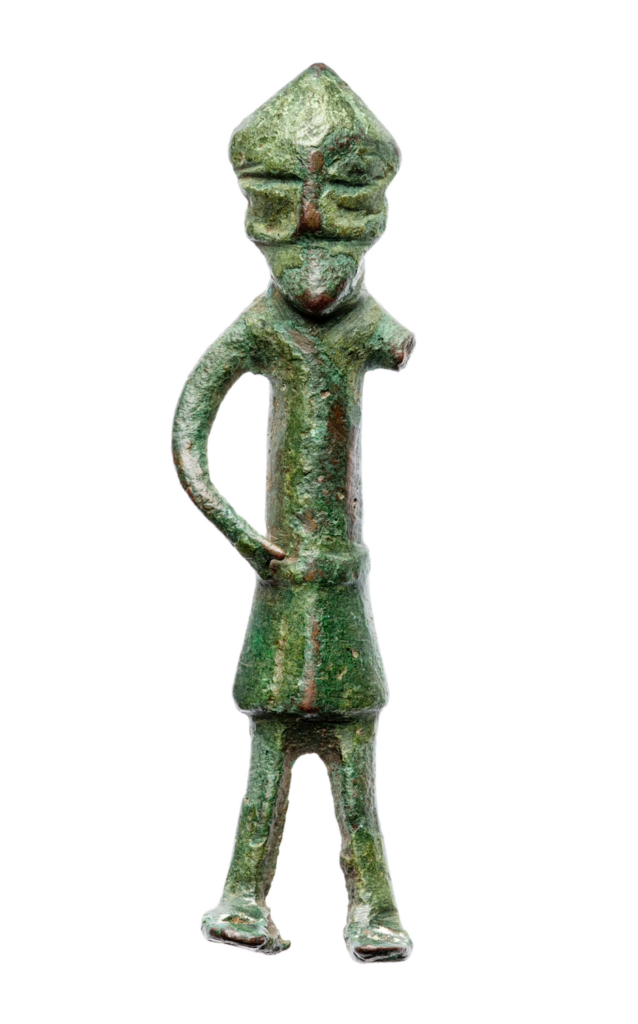
Someone once suggested I end the story earlier, but what I have understood of the nature of tales is that it’s precisely where things are difficult that they become interesting. So I began speaking to friends about the young Khan’s brutal cleansing, and new angles emerged.“You have no idea how long it takes before you are free on the inside, after a life with a false partner,” one of them said.“It is just like our own god Odin, hanging upside down in a tree,” said friends at Sagolabbet, the tiny Story Lab, and Camilla elaborated: according to Hávamál in the Poetic Edda, Odin throws himself onto a spear and hangs for nine nights in what may be Yggdrasil, the world tree—a remarkable offering to himself, for the sake of new knowledge.
I know that I hung on a windy tree
nine long nights,
wounded with a spear, dedicated to Odin,
myself to myself,
on that tree of which no man knows
from where its roots run.
From Hávamál, Sayings of the High One. Transl. Carolyne Larrington.
A Viking Age statuette of Odin, Photograph by Ola Myrin.
Odin abstains from food and drink, and the new knowledge he gains is the magical runes. And since spell-making with runes belonged to women’s domains, Camilla imagines that Odin is also granted access to female powers.
And my thoughts open. Being washed in the river and hung in the tree might be about something other than a moralistic cleansing. Searching for clues to the tale’s meaning within its own culture, I come to see that the witch’s influence is regarded as a threat to the whole kingdom and its balance. My teachers and classmates help me understand the ritual process as something communal.
Valentin urges me to set aside my individualistic, Protestant framework and tells me of ancient Egyptian purification rites concerned with restoring harmony and reconnecting broken bonds. In that tradition, impurity was alienation: to be cut off.
Weeks later, I am in Anna’s garden in Devon, speaking of my teenage years and my attempts to be pure inside. Which included not being angry, not being sad, not being sexual—unless in some obscure ”acceptable” way. And to be free from desire, whatever that was.
The young Khan’s purification is not, Anna says, an effort to eradicate something unpleasant or terrible from the young man, but to restore something that was already there. “A ritual they all wanted to perform to help him bring something lovely out.”
With a greater understanding of how my cultural background and personal experiences interplay as I listen to the story, I can finally imagine more freely.
After his long days and nights in the river’s cold water and high among the branches, the young man is marked. In one of the source texts, he is all skin and bone; in Martin Shaw’s retelling, he limps. But something else has changed. He knows now who he is looking for. He will not be deceived again.
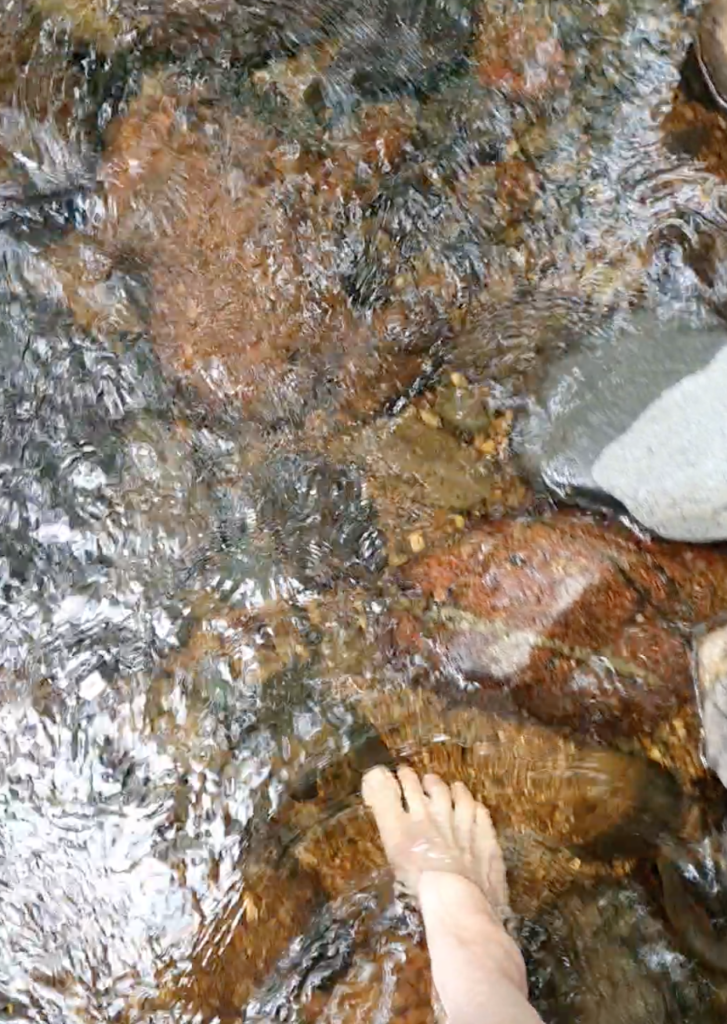
I think of Lethe and Mnemosyne, two rivers in Greek mythology representing forgetfulness and memory. Perhaps the young Khan is washed by both; perhaps he needs to forget and to remember, in order to return to himself.
I read about water and grief; I listen to Robert Macfarlane’s Is a River Alive? —and my understanding of what might happen when one lives near/ with/ in a river deepens.
In the final chapter, after long journeys and knowledge-gathering alongside people fighting for rivers’ rights to exist on their own terms, Macfarlane finally reaches an encounter with the river itself, in a mystical experience: “…and I find tears in my eyes that I did not put there, but the river did. It may involve a great reach outward of mind and imagination,” he writes, and I listen repeatedly to these words that manage to capture an experience beyond comprehension.
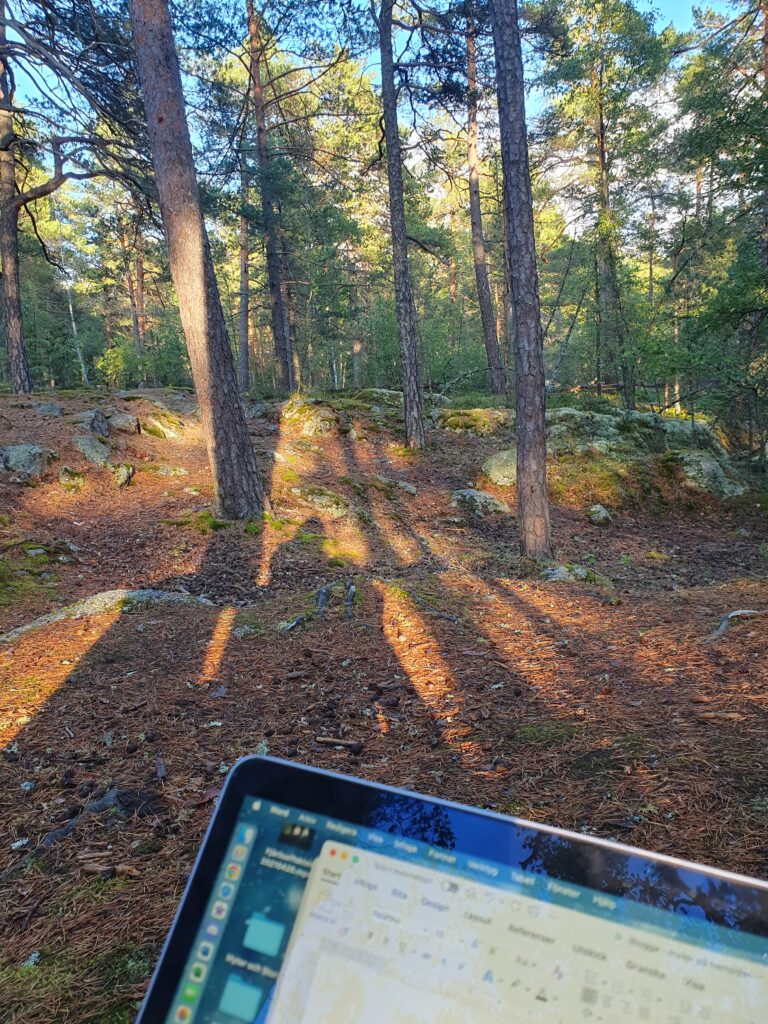
As I write this, I sit in the forest with my laptop. Once more I have remembered to come outside. In my thermos is the horsetail tea I got hold of in May.
Some noisy boys pass by, waving cheerfully; they’re heading to the lake to fish, dreaming of great pike. In the silence afterward, there’s a crack, and a deer stares at me for a brief moment. I am nearing the end of my thesis adventure, yet I feel as though I am only at the beginning.
So much in me still waits to be restored. The witches in my own life. The sorrow in my river. And I am surprised to find, here in the latter half of my journey with the Horsetail Girl, I’ve found such closeness to the young Khan, after first identifying so readily with her and her journey underground.
Both the Horsetail Girl and her suitor undergo what could be described as an initiation. When it has taken place, they are able to begin their life together. Ready to love with greater depth. He, perhaps, has learned to hold all of himself, no longer needing to flee into distractions when feelings threaten to overwhelm. She has learned to speak, and when she finally reaches the city and arrives at her wedding, her words are like red beads falling from her lips. A powerful image of how valuable and powerful words really are.
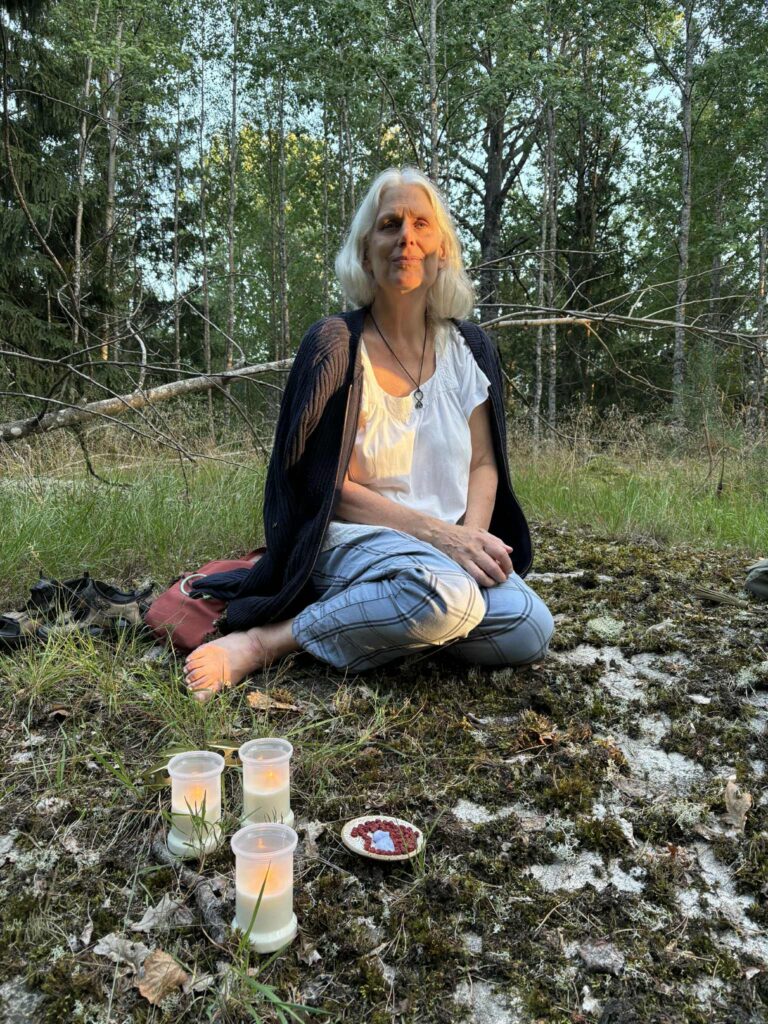
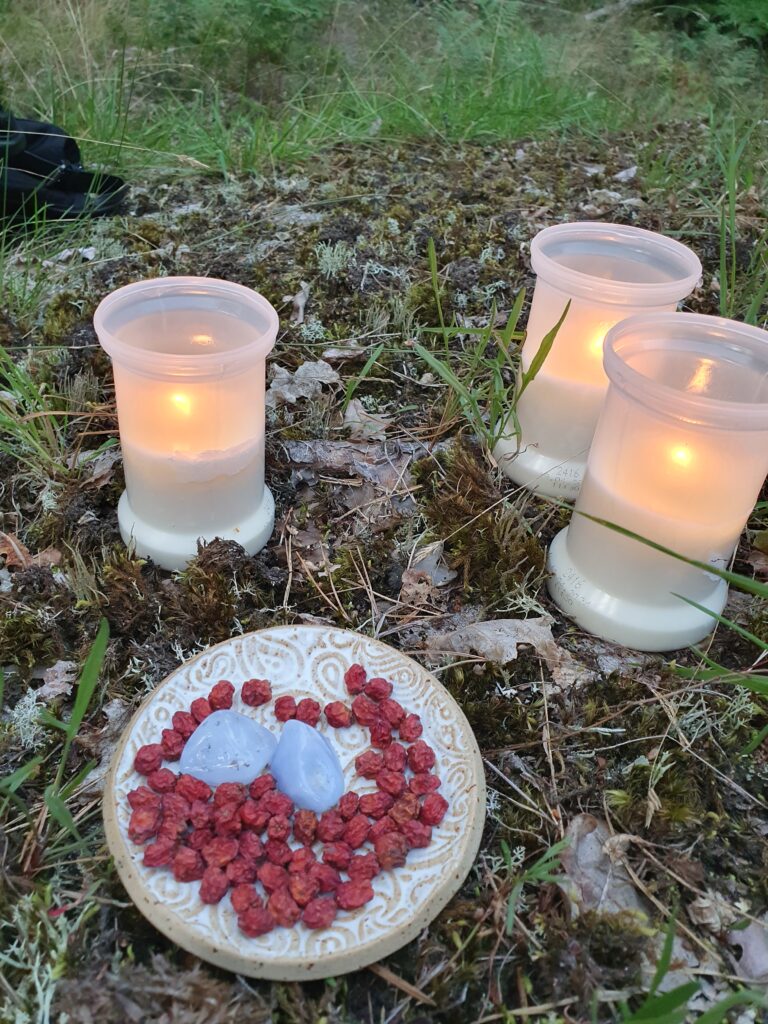
I have gathered rowan berries and carry them with me when I tell the story of the Horsetail Girl. Red beads from the trees outside my window.
This story holds both silence and voice, just like me. The horse’s secrets remain secrets still. But I know that this tale, like the river it carries within itself, sets something right in me, and I feel gratitude for that. For that and for you, reading this far and sharing my attempt to meet this story of the Sakha people, this living story.
Links:
All blog posts in the series gathered in one place
My primary source text: The Little Old Woman With Five Cows.
Martin Shaw also has published a written version of the story called Red Bead Woman
Is a River Alive? Podcast interview with Robert Macfarlane regarding his book. (The book is also available as audiobook read by himself)
Universal declaration on the rights of rivers.
GARN, a global network for the recognition of nature’s rights.
Cultural Survival, an organization fighting for indigenous people’s cultural and political rights.
