In my previous post, I wrote about the talking horse — you know, the one presented as a wedding gift to a young woman, born from a plant — about this horse being especially fascinating to me since it actually stays silent, when it could have helped by saying something. Was it shyness? Or did the horse want her to make her own mistakes?
The ability to speak with beings beyond the human world remains a mystery. C. S. Lewis, whose Narnia books I so loved as a child, writes in the essay On Fairy-Stories about our deep longing to communicate with other living beings. According to him this longing is ancient and stems from a feeling that a separation has occurred. A severance. A fate with a built in sense of guilt.
In beginning my master’s studies in Devon in 2021, I already knew: I had never fully let go of the animism of childhood. That very belief that we humans are not the only ones being conscious. The hope that one might actually speak to a horse. Or maybe a bird. Listen to a field in bloom. That it might matter to the stars whether we raise our gaze or not.
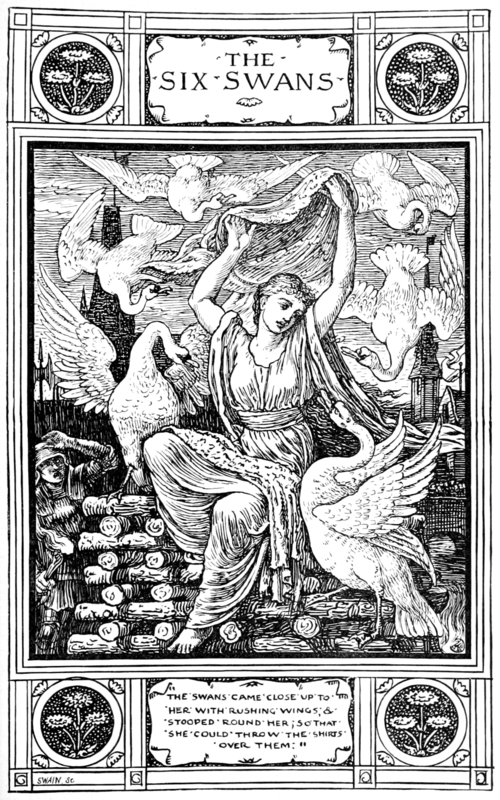
In the oldest of stories, those rooted in shamanistic cultures around the world, all this is taken for granted – humans and animals slip easily between each other’s forms of existence. You find it too in folklore and the world of Greek mythology: transformations. A band of brothers turn into white swans, a young woman fleeing danger becomes a tree.
(Image from the story collections of the Grimm Brothers, by Walter Crane)
Animals speak to humans, and listening matters. If an apple tree asks a girl to gently pick her apples so the branches will not break under the weight, we know that a wise child will do her best to help.
As a child, I used to go out in my raincoat when I was sad, and it was wet outside. I must have been about eleven. I can’t quite explain why, but I found it easier to tell the trees how I felt than to speak to people. When no one was watching (not hard in that kind of rain) I hugged the trees. Since then I’ve grown up, learnt to think like an adult, and for a while I believed that idea that animism was some kind of primitive developmental stage. A childish phase of brain development, a primitive stage of human understanding of how the world works. A set of superstitions that would, in time, be replaced by knowledge and science.
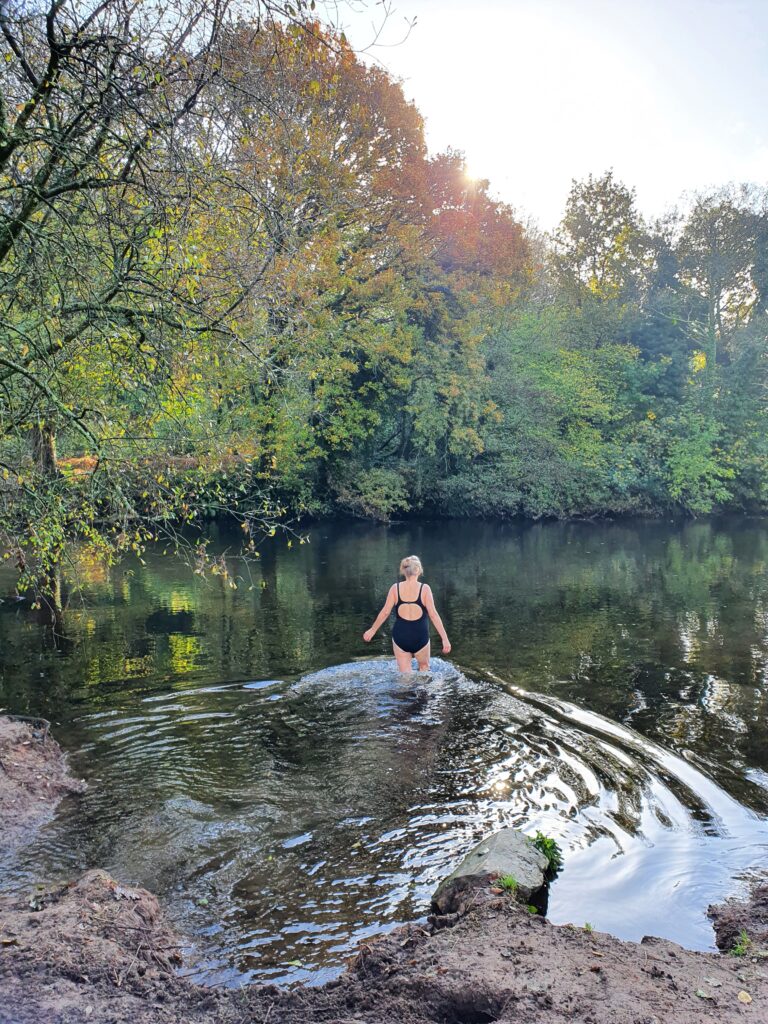
I don’t think like that anymore. It’s not that I can speak with stones or am especially good at interpreting birdsong. But I do believe this: if we consider ourselves beings among other beings, we’ll feel less alone and be less inclined to exploit our natural surroundings without giving something back. And ever since my teacher, the poet Alice Oswald, shared her own bond with the River Dart and took us swimming in its icy, rushing waters one late autumn evening, I’ve nurtured this thought: that the water, the river, or the forest lake that holds me is the closest I´ve come to a goddess. A spirit of water.
My master’s project, too, is an attempt to enter into relationship with something we don’t usually think of as sentient: a folk tale. But I treat my Siberian tale just like I treat the river. Think of it as something alive. With integrity. With the power to change me. Through working with the story, and especially through telling it, I begin to see myself.
But I also begin to see the world around me. Every time I tell the story, something new comes into focus, whether I’m performing for an audience of people or for pine needles and branches as I wander the trails of the Nacka nature reserve, experimenting.
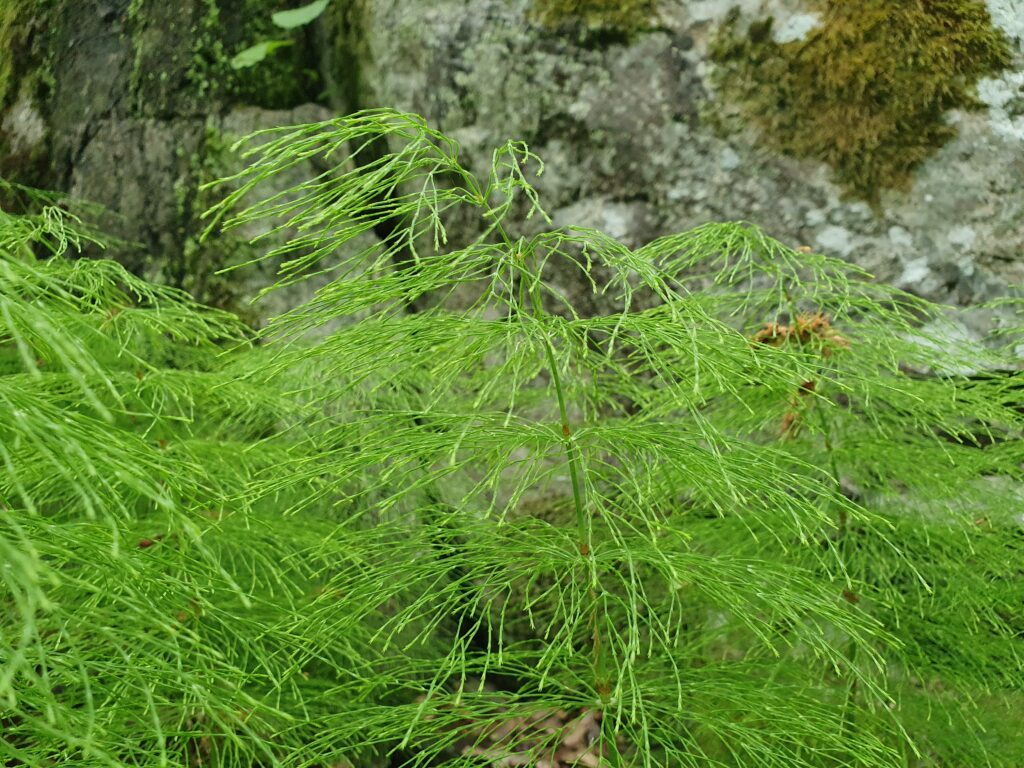
In the tale, an old woman with an unreasonable and remarkable longing for a child brings home a horsetail plant, sings to it, and tucks it into her bed. And whether it is her longing that makes it happen, or the magic of the earth, or some heavenly plan to help the Yakut, the Sakha people – somehow, the little plant lying there with its roots intact, wrapped in the old woman’s finest fabric, is transformed into a human. In the autumn of her life, the old woman is given a daughter.
Inspired by the plant that transforms into a young woman, I’m now delving into the world of plants. What does it mean to come from the plant kingdom into the world of humans? And what thoughts might the horsetail girl carry with her?
In the late 1980s, the bestselling book The Secret Life of Plants stirred the pot. Before then, for a long time intelligence was thought of as a uniquely human trait — perhaps with a few exceptions for trained chimpanzees or clever crows. But certainly not something you’d find in plants. Then came this book with provocative claims; that plants communicate, respond to music, and can distinguish truth from lies. Paradoxically, the book ended up halting much of the research into whether plants possess consciousness, intelligence, communicative abilities, or agency (what words should we use?). Funding dried up. Scientists were careful not to be associated with its dubious research methods and sweeping conclusions.
This is what I’m now learning on my forest walks, while listening to the audiobook The Light Eaters by Zoë Schlanger. Bursting with science, it is also a fascinating and personal narrative about the explosive developments in this research field over the past ten years, during which so much has happened. I’ve always known that plants convert sunlight into oxygen and nourishment that we can’t live without. So, I understand the title: The Light Eaters. And somewhere along the way, I’ve have learned the names of a few flowers. Nowadays, I can even tell the difference between an aspen, a whitebeam, or an elm.
But all this dizzying new knowledge about the agency and abilities of plants fills me with exhilaration. And my personal little research journey continues with Braiding Sweetgrass by Robin Wall Kimmerer which enriches my rides on the underground. Kimmerer writes from her dual perspective as an award-winning professor of botany and a member of the Indigenous Citizen Potawatomi Nation in Oklahoma. Her book is a plea for reciprocity – an attitude of respect and mutuality toward the plant life that was here long before us and on which we depend. Each chapter tells the story of a plant and what it has taught her.
And I wonder: have I even had that thought: what have I learned from the buttercup? From wheat? From gooseberries? From horsetail?
Next time I write, it will be from England, where I’ll be reuniting with friends — and the River Dart. I’ll hear my classmate Will Wilson’s version of the horsetail girl’s story and will get to know her from a perspective other than my own.
I will tell you then what happens when she rides the horse to her wedding. Inexperienced in the ways of human life. Quiet and far too lonely for a young bride. Until then; a few book recommendations:
The Light Eaters by Zoë Schlanger
Braiding Sweetgrass by Robin Wall Kimmerer
Here you will find the easiest path to other posts in this series
